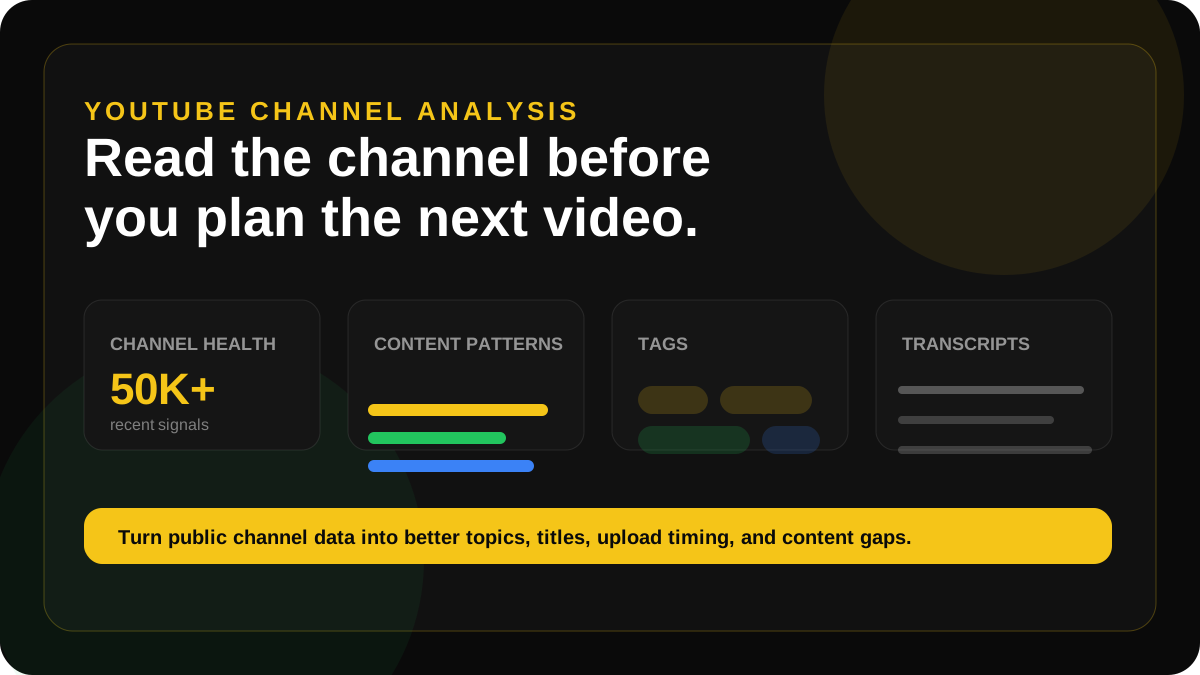
Most creators do not need more random content ideas. They need a cleaner way to understand what is already working in their niche. When you know which topics get views, which upload patterns keep showing up, what language competitors repeat, and what viewers are actually asking for, your next video becomes much easier to plan.
The problem is that channel research usually feels messy. You open a competitor's channel, scroll through their videos, check a few titles, maybe write down subscriber numbers, and then move on with a half-clear idea. After 30 minutes, you have notes, but not a real strategy. That is why many creators skip research and publish from guesswork.
This guide shows a faster way. The goal is not to copy another creator. The goal is to read the market. A good YouTube channel analysis tells you what the audience already responds to, where the content gaps are, and how your own channel can make a stronger promise. With the right workflow, you can get the important signals from any public channel in under a minute.
You can use this process for a competitor (refer to our YouTube competitor analysis guide for step-by-step auditing details), a creator you admire, a channel in a new niche, or your own channel. The same questions apply every time: what is the channel known for, what content performs best, how often do they publish, what words and tags do they repeat, and what can you learn without blindly copying their style?
What You Should Look For First
A useful channel analysis starts with the big picture. Before you study titles, tags, or transcripts, look at the channel as a whole. Subscriber count is only one part of the story. A channel with fewer subscribers can still be healthier than a larger channel if its recent videos get stronger views and comments, as documented in the official YouTube Analytics Help Center.
Start with these basic signals:
- Subscriber count compared with average views per video.
- Total video count and how long the channel has been publishing.
- Recent upload consistency over the last 30 to 90 days.
- Top performing videos and whether those videos share a common topic.
- Audience language in comments, questions, and repeated complaints.
These numbers help you understand whether a channel has a loyal audience, search traffic, viral spikes, or a content library that has grown slowly over time. Do not judge a channel only by one video. One viral upload can make a creator look bigger than they really are. The pattern matters more than the single result.
Once you understand the big picture, you can go deeper. The next step is to look for repeatable patterns. You want to find the small habits behind the channel's results: the title style, upload rhythm, topic angles, tags, thumbnails, and the kind of problems the creator keeps solving for the audience.
The 60-Second YouTube Channel Analysis Workflow
The fastest way to analyze a YouTube channel is to separate the work into four layers. Each layer answers one clear question. If you try to study everything at once, the research becomes confusing. If you move layer by layer, the channel starts to make sense quickly.
Layer 1: Channel Health
Channel health means the basic relationship between audience size and audience activity. Look at subscribers, total views, video count, and recent video performance. Then compare the channel's older videos with its newer uploads. This tells you whether the channel is growing, slowing down, or surviving on old content.
If a channel has many subscribers but weak recent views, the audience may be tired of the format. If a smaller channel gets high views compared with its subscriber count, the topics may be strong in search or recommendations. Both cases are useful. One shows what to avoid. The other shows where demand is active.
Also check the balance between evergreen and trend-based content. Evergreen videos keep bringing views for months or years. Trend videos can move fast but fade quickly. A healthy channel usually has a mix, but the best mix depends on the niche. Education, finance, software, health, and tutorials often benefit from evergreen content. Entertainment and news-based niches may rely more on trends.
Layer 2: Content Patterns
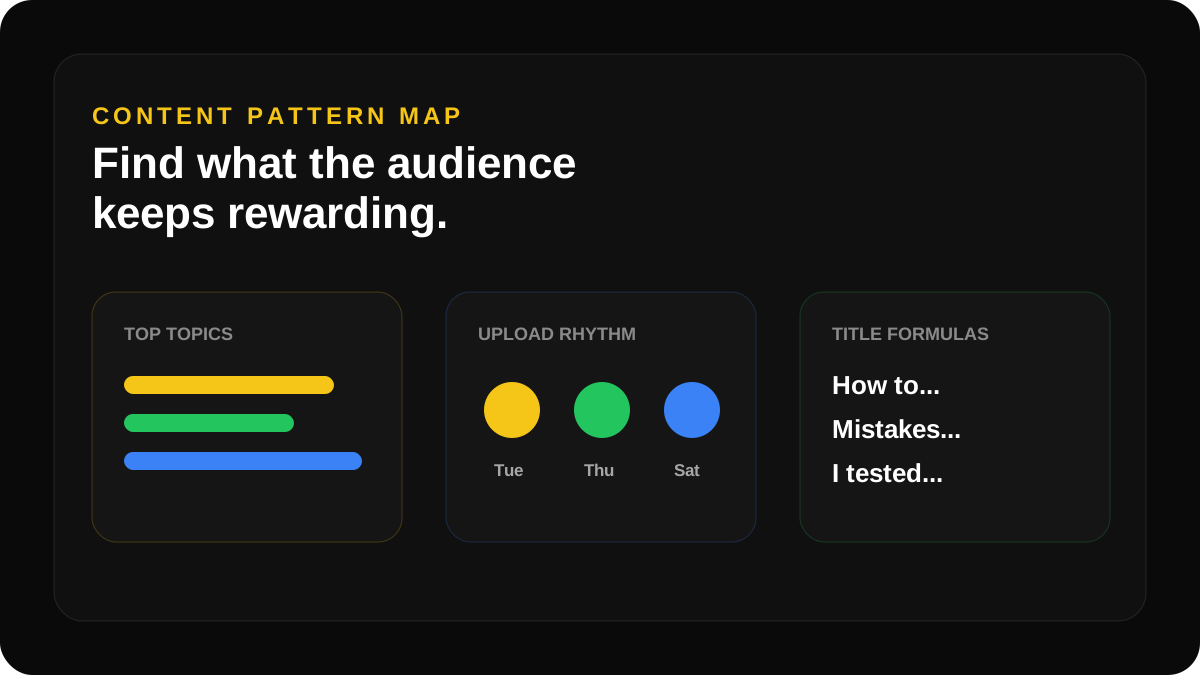
Now study what the channel publishes again and again. Look at the top videos and ask what they have in common. Are they beginner guides, product comparisons, tutorials, reaction videos, case studies, or list-based content? The format often matters as much as the topic.
For example, a channel about productivity may have many videos, but the strongest ones might all be about "simple systems for beginners." That tells you the audience does not only want productivity advice. They want advice that feels easy to start. That is a much more useful insight than simply saying, "productivity videos work."
Pay attention to title structure too. Some channels win with direct search titles like "How to edit videos faster." Others win with curiosity titles like "I changed one editing habit and saved 10 hours." Neither style is automatically better. The right style depends on the audience and the niche.
Layer 3: Tags And Niche Signals
Tags are not magic ranking buttons, but they are useful clues. A creator's tags show how they want YouTube to understand the video. When the same tags appear across many videos, you can see the channel's core niche map. To optimize your channel-level recommendations, check out our guide on YouTube Channel Keywords to see how they impact home feed recommendations.
Look for three types of tags. Broad tags describe the main market, such as "YouTube growth" or "fitness." Specific tags describe a clear topic, such as "YouTube keyword research" or "home workout for beginners." Brand or phrase tags show repeated positioning, such as a channel name, series name, or common phrase.
The best insight comes from tag clusters. If a competitor repeatedly connects "faceless YouTube channel," "AI video tools," "script writing," and "YouTube automation," you can see the content lane they are trying to own. You may decide to compete in that lane, choose a smaller sub-niche, or build a different angle around the same audience problem.
Do not copy tags without thinking. Instead, use tags to understand how the channel frames its content. Then build your own stronger content plan around your experience, examples, and audience promise.
Layer 4: Transcript And Language Research
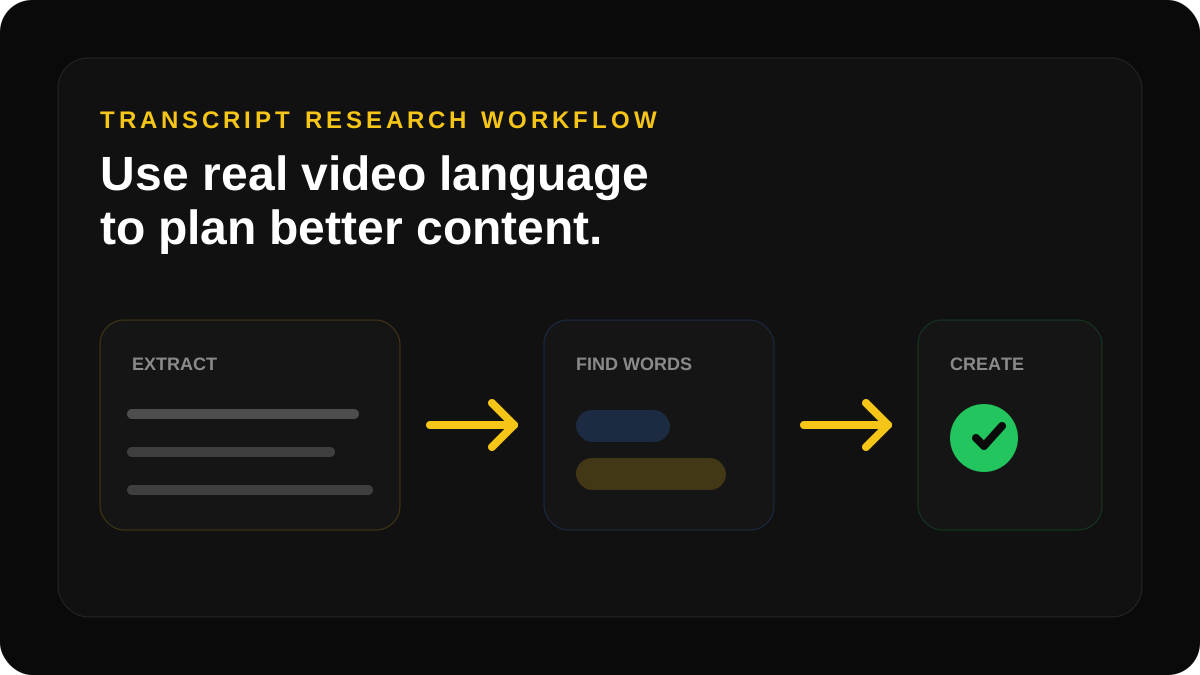
Transcripts are where the best research happens. Titles and thumbnails show the promise, but transcripts show the delivery. They reveal the phrases a creator repeats, the objections they answer, the examples they use, and the way they move viewers from problem to solution.
If you study transcripts across several top videos, you can find the real language of the niche. You may notice that viewers do not say "content optimization." They say "why are my videos not getting views?" That difference matters. Good content uses language the audience already understands.
Transcript research also helps you find gaps. Maybe a competitor mentions a problem but never explains it deeply. Maybe they answer beginner questions but ignore advanced users. Maybe they use weak examples. These gaps can become your next video topics.
How To Turn Research Into Better Video Ideas
Research is only useful when it changes what you publish. After you analyze a channel, do not just save the data and forget it. Turn the findings into a simple action list.
Start with topics. Write down the themes that appear again and again in the best videos. Then look for missing angles. If every competitor has a beginner guide, maybe your opportunity is a practical checklist, a mistake-based video, a case study, or a side-by-side comparison.
Next, work on titles. Do not copy titles word for word. Instead, study the promise behind them. A strong title usually does one of four things: solves a painful problem, promises a clear outcome, creates useful curiosity, or makes a complex topic feel simple. Build your own titles around those same principles.
Then check upload timing. If several strong channels in your niche publish around the same days or times, that may show when the audience is active. You do not have to follow their schedule exactly, but it gives you a better starting point than guessing.
Finally, build a small content calendar. Choose five to ten ideas from your research. Mark which ones are search-focused, which ones are audience-building, and which ones are designed to test a new angle. This gives your next month of content a clear direction.
Common Mistakes To Avoid
The first mistake is copying too closely. Competitor research should sharpen your thinking, not replace it. If you copy topics, titles, thumbnails, and wording, viewers will notice. You also lose the chance to build your own voice.
The second mistake is only studying large channels. Big channels are useful, but they can hide the early signals that matter to smaller creators. Study mid-size and fast-growing channels too. They often show current demand more clearly because their growth is still active.
The third mistake is ignoring recent performance. A video from three years ago may have millions of views, but that does not always mean the topic is still fresh. Always compare older winners with recent winners. If both perform well, the topic is probably evergreen. If only old videos perform, the channel may be relying on past momentum.
The fourth mistake is collecting too much data without making decisions. You do not need 200 rows in a spreadsheet before you publish. You need enough evidence to choose a better topic, create a stronger title, and understand what the audience wants next.
Where GenXEmpire Pro Fits In
You can do some of this research manually, but it takes time. GenXEmpire YouTube Analyzer Pro is built to make the process faster. It helps you analyze channel data, detect niche signals, study tags, extract transcripts, review upload patterns, and export useful data from one place.
The main benefit is speed. Instead of opening many tabs and copying details by hand, you can look at the channel as a complete system. That makes it easier to compare competitors, plan content, and spot opportunities before you spend hours creating a video.
It is still your job to make good creative decisions. A tool can show patterns, but it cannot replace your taste, experience, and understanding of your audience. The best results come when you combine data with your own point of view.
A Simple Checklist For Your Next Analysis
Before you analyze another channel, use this checklist. It keeps the research focused and prevents you from getting lost in details.
- Check recent views, not only subscriber count.
- Find the top five videos and write down the shared topic pattern.
- Look at upload frequency and the days or times that repeat.
- Review tags for broad niche, specific topic, and repeated phrase signals.
- Read transcripts from the strongest videos to find audience language.
- Write three content gaps the channel has not covered well.
- Create five original video ideas from the research.
Final Thoughts
YouTube growth gets easier when you stop guessing. A good channel analysis shows what the audience already watches, what competitors repeat, and where the content gaps are. You still need to create useful videos, but your decisions become clearer.
Start with one competitor today. Check the channel health, study content patterns, review tags, and read the transcript language. Then turn those findings into a small list of video ideas you can actually publish. That is how research becomes growth.
The creators who improve fastest are usually not the ones who work with the most noise. They are the ones who notice patterns, make simple decisions, and publish with a plan. Channel analysis gives you that plan.
Frequently Asked Questions
How often should I analyze competitor channels?
For most creators, once every two to four weeks is enough. If your niche moves quickly, review top channels weekly. The goal is to stay aware of patterns without spending all your time researching.
Should I copy tags from competitors?
No. Use tags as research signals, not as a copy-and-paste shortcut. Tags can help you understand the niche, but your video still needs a strong title, clear topic, useful content, and good audience retention.
Can a small channel use this workflow?
Yes. In fact, small channels benefit the most because every upload matters. Better research helps you avoid weak topics and focus on videos with a clearer audience demand.
What is the most important metric to check?
Recent average views are usually more useful than subscriber count. They show how active the audience is right now and whether the channel's current content still connects.